Dassault Falcon 50EX
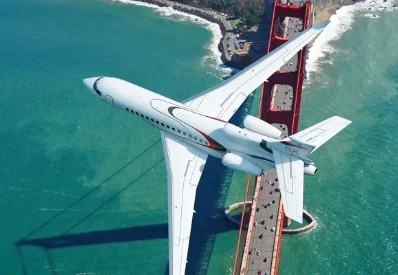
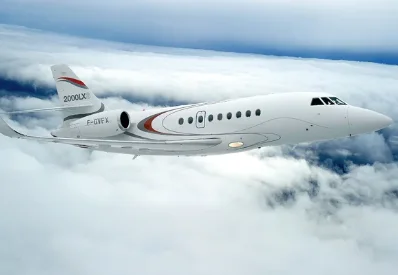
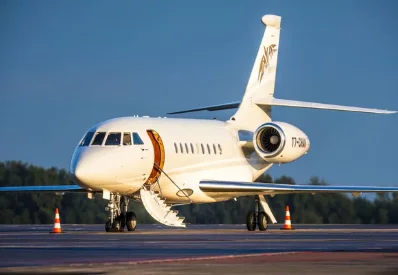
The Falcon 50 was designed to perform non-stop flights across the North Atlantic or the United States, and thereby became the first private jet with intercontinental range. Although Dassault suspended its delivery in 2007, it remains a popular choice in the Super Midsize Jet category. Announced in 1995, the Falcon 50EX replaced its predecessor. Its first flight took place in 1996, boasting modernised avionics, extended range and improved performance. This Long-Range Business Jet usually comes with a seating configuration for nine passengers, with a four-seat club arrangement, two facing seats with foldout tables and a three-person divan. The cabin also includes three closets ideal for briefcases, suits and coats, power plugs to work and experience a productive journey, and it is equipped to prepare hot and cold dining options. Both the Falcon 50 and the Falcon 50EX have great runway performance, allowing travellers to access challenging airports. However, the Falcon 50EX outperforms the Falcon 50 on all fronts, as it is able to cruise faster at high altitudes, cover a greater range, and burn less fuel, powered by three turbofan engines. The maximum speed and range indicated here are approximate figures, since actual performance depends on the departure date’s flight conditions and varies according to multiple factors such as headwinds or number of passengers.
Super midsize jet
| Specification | Value |
|---|---|
| Manufacturer | Dassault |
| Category | Super midsize jet |
| Range* | 5982 km 3230 NM |
| Cruise speed | 891 km/h 481 kts |
| Seats** | 9 |
| Suitcases | 11 |


* with IFR reserves
** in standard configuration
Aircraft Pictures


History
The Falcon 50EX emerged as an upgraded version of Dassault's pioneering trijet design, launched in 1995 to enhance the performance of the original Falcon 50. The EX variant addressed operator demands for improved speed, flight ceiling, and extended range capabilities.
The first Falcon 50EX made its maiden flight at Mérignac on April 10, 1996, piloted by Jean Bongiraud and Etienne Faurdessus. The upgrade programme incorporated three DEEC-controlled TFE 731-40 engines, an APU as standard equipment, and updated avionics systems.
French certification was achieved in late 1996, with US approval following shortly thereafter. The first customer delivery took place in January 1997, with full production beginning in May 1997. The aircraft featured the Rockwell Collins Pro Line 4 integrated avionics suite.
Key improvements included enhanced engine controls, improved rudder control systems, and modernized cockpit technology. Production continued until 2008, with 100 aircraft manufactured plus one modified Falcon 50. The 50EX represented the culmination of Dassault's trijet experience, maintaining the unique three-engine configuration while incorporating modern systems and enhanced performance.
Technical Specifications
General information
| Model name | Falcon 50EX |
|---|---|
| Manufacturer | Dassault Aviation |
| Aircraft category | super midsize jet |
| ICAO Designator | FA50 |
| Start/End of Production | 1996 - 2008 |
| Number of pilot(s) | 2 |
Performances
| Range (with IFR reserves) | 3230 NM (5982 km) |
|---|---|
| Ferry range | 3400 NM (6297 km) |
| Cruise speed | 481 kts (891 km/h) |
| Max Operating Speed – VMO | 370 KIAS |
| Max Mach Operating Speed - MMO | Mach 0.86 |
| Long-Range Cruise Speed - LRC | 417 KTAS |
| Approach Speed | 95 kts |
| Takeoff Distance | 1509 m |
| Average Landing Distance | 666 m |
| Rate of Climb | 2176 ft/min |
| Service Ceiling | 49000 ft |
| Thrust | 3704 lbf |
Aircraft technology
| Engine type | Turbofan |
|---|---|
| Engine(s) | 3 x Honeywell TFE731-40 |
| Avionics | Collins Pro Line 4 |
Dimensions and capacity
| Aircraft length | 18.52 m |
|---|---|
| Aircraft height | 7 m |
| Wing span | 18.86 m |
| Cabin height | 1.8 m (5.9 ft) |
| Cabin length | 7.2 m (23.5 ft) |
| Cabin width | 1.9 m (6.1 ft) |
| Baggage volume | 3.26 m3 |
| Seats (standard config) | 9 |
| Seats (max) | 19 |
| Suitcases | 11 |
| Carry-on luggage | 6 |
| Maximum payload | 1506 kg |
| Maximum TakeOff Weight - MTOW | 18144 kg |
| Maximum Landing Weight - MLW | 16200 kg |
| Fuel capacity | 8800 L |
Where the Dassault Falcon 50EX flies most
The Dassault Falcon 50 is an older three-engine jet, and most of its charter flying now takes place outside this region. In 2025, 7% of its commercial charter flights started or ended in Europe, the Middle East or North Africa.
Lyon leads with 138 movements, ahead of Istanbul (87) and Valletta (55). From Lyon, the type flew to Bucharest, Malta, Paris and Libya. Many of Valletta's movements were also flights to Libya, including Mitiga in Tripoli. Istanbul is a summer market for the type, with 77% of its movements between June and September.
Trips are long. Half of the flights in the region covered more than 1,300 km, and the Aegean coast appears with Izmir and Bodrum.
Based on LunaJets analysis of ADS-B flight tracking data. Contains information from adsb.lol, made available under the Open Database License (ODbL). The figures cover take-offs and landings on commercial charter flights (Part 135 / CAT) in 2025, in Europe, the Middle East and North Africa. They include every version that shares the aircraft's type code, and a city needs at least 20 movements to be ranked.
Top Cities in 2025
The Falcon 50 often flies from France to the central Mediterranean. The Lyon page and flights to Malta cover charter prices and airports.
FAQ
How does the Falcon 50EX compare to the Citation X?
The Falcon 50EX has an NBAA IFR range of 5,982 km (3,230 nm) and carries nine passengers in a wide, tri-engine cabin, cruising at 891 km/h (481 kts). The Citation X is faster, with a top speed of Mach 0.92 (≈952 km/h / 514 kts), but has a slightly shorter range of about 5,762 km (3,111 nm) and typically seats 8 passengers. While the Citation X is chosen for speed, the Falcon 50EX is valued for its short-field capability, intercontinental scope, and extra reliability from three engines.
How far can the Falcon 50EX fly on a charter flight?
The Falcon 50EX has an NBAA IFR range of 5,982 km (3,230 nm). This enables nonstop flights such as Paris to Dubai or London to Lagos. While not as long-range as newer Falcons, the 50EX remains effective for intercontinental travel and is still chosen for business and leisure missions that require nonstop performance.
When was the Falcon 50EX produced?
Dassault produced the Falcon 50EX between 1996 and 2008. It replaced the earlier Falcon 50, bringing performance and avionics upgrades while keeping the same tri-engine design. The 50EX remains a respected option on the charter market, particularly for passengers who value its range and operational flexibility.
What is the difference between the Falcon 50 and the Falcon 50EX?
The Falcon 50EX is an upgraded version of the original Falcon 50. It introduced AlliedSignal TFE731-40 engines, improving thrust and fuel efficiency, as well as Collins Pro Line 4 avionics for advanced flight management. These upgrades improved climb rates, extended range to 5,982 km (3,230 nm), and enhanced reliability compared with the original model.
Where does the Falcon 50EX fit in the Falcon family?
The Falcon 50EX, produced from 1996 to 2008, bridged the gap between the smaller Falcon 20/200 series and the larger Falcon 900 line. It retained the tri-engine layout but offered longer range and better runway performance than earlier Falcons. While newer models like the Falcon 2000, 7X, and 8X became more prominent, the 50EX carved out a niche as a versatile intercontinental jet with strong short-field capability, keeping it valued in charter fleets even today.