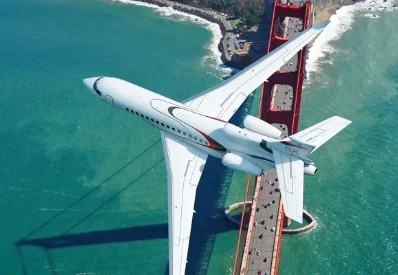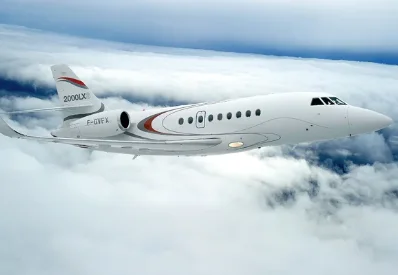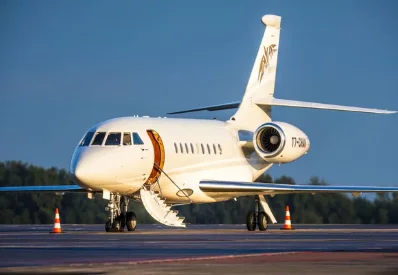

Dassault Falcon 900C
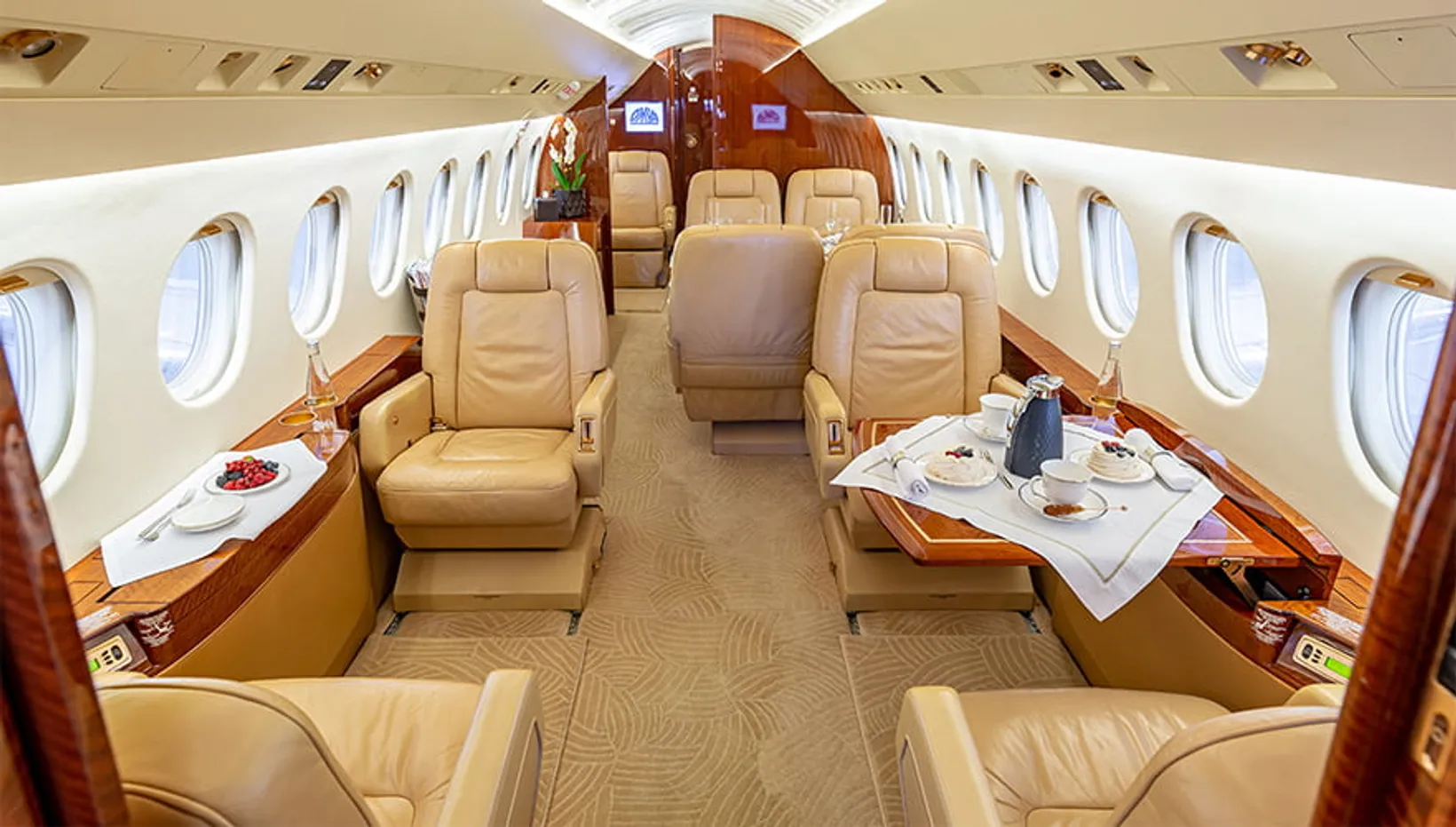
Dassault launched the Falcon 900C in 2000 as a replacement for the 900B, featuring the same three turbofan engines as its predecessor but with the innovative avionics of the Falcon 900EX. Although it does not have the same long-range capacity as the 900EX, the 900C still offers intercontinental capabilities and is a high-performance aircraft with an impressive maximum cruise speed and decent fuel efficiency. The Falcon 900C belongs to the category of Super Large Jets and boasts a spacious and comfortable cabin with a full-sized galley. The interior, which can be partitioned into three separate sections, can accommodate up to 14 passengers in various formations depending on the chosen seating configuration. In this way, the Falcon 900C succeeds in maintaining the impressive performance and excellent comfort for which the entire Falcon 900 range is so highly regarded.
Super large jet
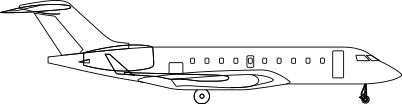
| Specification | Value |
|---|---|
| Manufacturer | Dassault |
| Category | Super large jet |
| Range* | 7408 km 4000 NM |
| Cruise speed | 878 km/h 474 kts |
| Seats** | 12 |
| Suitcases | 12 |


* with IFR reserves
** in standard configuration
Aircraft Pictures
History
Dassault introduced the Falcon 900C in 2000 as a replacement for the 900B, combining the proven airframe and avionics of the 900B with the more powerful engines from the 900EX.
The 900C represented a strategic approach to aircraft development, leveraging existing certified systems while incorporating proven powerplant improvements. First customer deliveries began in 2000, offering operators enhanced performance without the complexity of entirely new systems.
This hybrid approach allowed customers to benefit from the TFE731-60 engines that powered the 900EX, while maintaining the familiar systems and operational procedures of the 900B platform. The 900C provided a performance upgrade path for existing Falcon operators.
The aircraft served as a bridge between the earlier 900B and the more advanced 900DX that would follow, demonstrating Dassault's flexible approach to meeting diverse customer requirements within the Falcon 900 family.
Technical Specifications
General information
| Model name | Falcon 900C |
|---|---|
| Manufacturer | Dassault Aviation |
| Aircraft category | super large jet |
| ICAO Designator | F900 |
| Start/End of Production | 1999 - 2005 |
| Number of pilot(s) | 2 |
Performances
| Range (with IFR reserves) | 4000 NM (7408 km) |
|---|---|
| Ferry range | 4600 NM (8519 km) |
| Cruise speed | 474 kts (878 km/h) |
| Max Operating Speed – VMO | 370 KIAS |
| Max Mach Operating Speed - MMO | Mach 0.87 |
| Long-Range Cruise Speed - LRC | 426 KTAS |
| Approach Speed | 110 kts |
| Takeoff Distance | 1585 m |
| Average Landing Distance | 671 m |
| Service Ceiling | 51000 ft |
| Thrust | 4750 lbf |
Aircraft technology
| Engine type | Turbofan |
|---|---|
| Engine(s) | 3 x TFE731-5BR-1C |
| Avionics | Honeywell Primus 2000 |
Dimensions and capacity
| Aircraft length | 20.24 m |
|---|---|
| Aircraft height | 7.53 m |
| Wing span | 19.33 m |
| Cabin height | 1.9 m (6.2 ft) |
| Cabin length | 10.11 m (33.17 ft) |
| Cabin width | 2.34 m (7.7 ft) |
| Baggage volume | 3.6 m3 |
| Seats (standard config) | 12 |
| Seats (max) | 19 |
| Suitcases | 12 |
| Carry-on luggage | 10 |
| Maximum payload | 21908 kg |
| Maximum TakeOff Weight - MTOW | 20640 kg |
| Maximum Landing Weight - MLW | 19051 kg |
FAQ
Does the Falcon 900EX have more range than the Falcon 900C?
Yes, the Falcon 900EX significantly outperforms the 900C in range capability. Whilst the 900C offers 7,408 km (4,000 nautical miles), the 900EX extends to 8,338 km (4,502 nautical miles), providing an additional 930 km of range. This difference enables the 900EX to complete longer intercontinental routes that might require a fuel stop with the 900C.
How many passengers can the Falcon 900C accommodate?
The Falcon 900C can seat between 8 and 12 passengers in standard configurations, with a maximum capacity of 19 passengers. The cabin features three separate sections that can be configured in various formations, providing flexibility for different mission requirements whilst maintaining the comfort expected in a super large jet.
What is the cruising speed of the Falcon 900C?
The Falcon 900C cruises at 878 km/h (474 knots), making it well-suited for short European routes where speed efficiency matters. For instance, a flight from London to Paris takes approximately 45 minutes, allowing business travellers to complete same-day return trips with minimal time away from the office.
What are the differences between the Falcon 900C and other Falcon 900 variants?
The Falcon 900C represents a hybrid approach within the Falcon 900 family. Compared to the earlier 900B, the 900C features more powerful TFE731-60 engines borrowed from the 900EX, whilst maintaining the same 7,408 km range as the 900B but with improved fuel efficiency. The 900C uses the proven avionics from the 900EX rather than the 900B's older systems, yet lacks the extended fuel capacity that gives the 900EX its superior 8,338 km range. Essentially, the 900C bridges the gap between the 900B's systems and the 900EX's performance capabilities.
What is the maximum range of the Falcon 900C, and which city pairs can it connect?
The Falcon 900C offers a maximum range of 7,408 km (4,600 nautical miles), providing intercontinental capabilities for most business missions. This range allows direct flights such as London to Dubai or New York to Rome without refuelling stops, making it practical for transatlantic and Middle Eastern routes.