


Pilatus PC-12 NGX
The third generation of the most successful single-engine turboprop family is the most modern business aircraft in its class: with the Pilatus PC-12 NGX you rent an innovative, luxurious and flexible private aircraft.
Turboprop

| Specification | Value |
|---|---|
| Manufacturer | Pilatus |
| Category | Turboprop |
| Range* | 3339 km 1803 NM |
| Cruise speed | 537 km/h 290 kts |
| Seats** | 6-8 |
| Suitcases | 5 |


* with IFR reserves
** in standard configuration
Aircraft Pictures
History
The PC-12 NGX represents the third generation of Pilatus' successful single-engine turboprop family, building on over 30 years of continuous development. The Swiss manufacturer first announced the NGX at the NBAA convention in October 2019, with certification already completed.
Development of the original PC-12 began in 1989, with the first flight taking place on May 31, 1991. The aircraft entered service in 1994 after receiving both Swiss and FAA certification. With over 1,750 units delivered across all variants, the PC-12 became the world's most popular single-engine turboprop.
The NGX introduces significant technological advances, starting with the new Pratt & Whitney PT6E-67XP engine. This powerplant features dual-channel electronic propeller and engine control - a first for single-engine turboprops. The system enables autothrottle capability and a quiet mode that reduces propeller speed from 1,700 to 1,550 rpm without losing power.
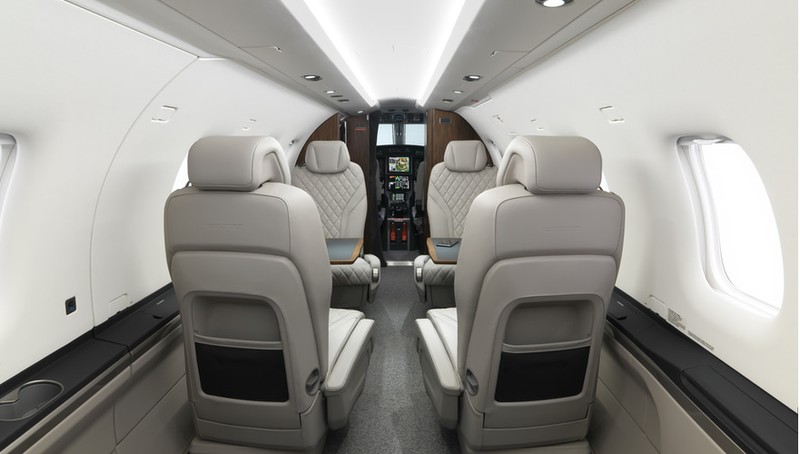
Pilatus worked with BMW Designworks to completely redesign the cabin, adding larger windows adapted from the PC-24 business jet. The Advanced Cockpit Environment features four high-resolution screens and updated Honeywell avionics. First deliveries began in the second quarter of 2020, continuing the PC-12's reputation as the benchmark for single-engine business aviation.
Technical Specifications
General information
| Model name | PC-12 NGX |
|---|---|
| Manufacturer | Pilatus Aircraft |
| Aircraft category | turboprop |
| ICAO Designator | PC12 |
| Start/End of Production | 2020 - Still in production |
| Number of pilot(s) | 1-2 |
Performances
| Range (with IFR reserves) | 1803 NM (3339 km) |
|---|---|
| Ferry range | 1889 NM (3500 km) |
| Cruise speed | 290 kts (537 km/h) |
| Max Operating Speed – VMO | 240 KIAS |
| Long-Range Cruise Speed - LRC | 262 KTAS |
| Approach Speed | 85 kts |
| Takeoff Distance | 757 m |
| Average Landing Distance | 661 m |
| Rate of Climb | 1920 ft/min |
| Service Ceiling | 30000 ft |
| Thrust | 1200 shp |
Aircraft technology
| Engine type | Turboprop |
|---|---|
| Engine(s) | 1 x Pratt & Whitney Canada PT6E-67XP |
| Avionics | Honeywell Primus Epic 2.0 (Pilatus ACE) |
Dimensions and capacity
| Aircraft length | 14.4 m |
|---|---|
| Aircraft height | 4.26 m |
| Wing span | 16.28 m |
| Cabin height | 1.47 m (4.82 ft) |
| Cabin length | 5.16 m (16.9 ft) |
| Cabin width | 1.52 m (5.0 ft) |
| Baggage volume | 1.13 m3 |
| Seats (standard config) | 6-8 |
| Seats (max) | 10 |
| Suitcases | 5 |
| Carry-on luggage | 3 |
| Maximum payload | 1035 kg |
| Maximum TakeOff Weight - MTOW | 4740 kg |
| Maximum Landing Weight - MLW | 4500 kg |
| Fuel capacity | 1522 L |
Advantages & Disadvantages
Advantages of a Pilatus PC-12 NGX as a rental aircraft:
- Technologically advanced: With the PT6E-67XP, the Pilatus receives the latest version of the proven PT6 engine from Pratt & Whitney Canada. For the first time in this aircraft class, an electronic propeller and engine control system is used. Thanks to this innovation, the maximum rate of climb and airspeed have been increased. With the new "low speed mode", the propeller speed can be slowed down, which significantly reduces cabin noise.
- Comfortable: The latest cabin comfort features of the Pilatus PC-24 business jet are now also available in the new Pilatus turboprop. In cooperation with BMW Designworks, the cabin experience has been taken to a new level: From larger windows that allow more natural light into the cabin, to completely flat, adjustable leather seats, USB and power connections, to onboard Wi-Fi.
- Off-road capability: The PC-12 NGX lands safely in places that are inaccessible to other aircraft of comparable size. This is made possible by its suitability for short takeoff/landing distances and unpaved runways. The third generation of the best-selling PC-12 therefore also brings passengers closer to their destination than many jet-powered or twin-engined private aircraft.
- Spacious cabin: The PC-12 NGX offers seats for a maximum of 10 passengers with luggage and one pilot. The 9.34 cubic meter cabin volume allows even tall passengers a comfortable amount of leg and headroom. Large and bulky pieces of luggage can be easily loaded and unloaded via the large side cargo door. Since the cargo is located in the rear part of the aircraft, the luggage is also accessible during the flight.
- Tried and tested: The latest further development of the world's best-selling single-engine turboprop family stands for proven safety and functionality. With over 1750 units sold and powered by the reliable PT6 turboprop engine from Pratt & Whitney Canada. In terms of safety record, too, the latest PC-12 is on a par with twin-engined business jets.
Disadvantages of a Pilatus PC-12 NGX as a rental aircraft:
- Limited availability: The first customer deliveries were made in the second half of 2020. Due to the deliberately limited production capacities of the Swiss manufacturer, the PC-12 NGX will initially only be available in limited numbers as a rental aircraft.
- Lower speed then jets: The new Pilatus is celebrated for its high top speed compared to other turboprops. Compared to business jets, it is nevertheless the slower version. If the aim is to travel to a distant destination as quickly as possible, a flight in the new Pilatus business jet (PC-24) is a faster alternative.
Originally conceived as a cargo and training aircraft, the PC-12, now in its third generation, continues to prove its versatility and pioneering role in the market for single-engine business jets. With absolutely top equipment in the cockpit and the aircraft cabin, it is not surprising that the PC-12 NGX is regularly sold out.
Where the Pilatus PC-12 NGX flies most
This ranking covers the whole Pilatus PC-12 family, including the PC-12 NGX. London comes first with 2,250 movements, followed by Geneva (2,138) and St Tropez (1,824).
Runways explain much of this list. La Môle, the airport of St Tropez, has a runway of little more than 1,000 m between hills. Gstaad-Saanen sits at about 1,000 m of altitude with a 1,400 m runway, and Lausanne-Blécherette has only 875 m. Larger jets cannot use these airfields, so the PC-12 flew 81% of commercial charter movements at St Tropez, 93% at Gstaad and almost all of them at Lausanne. In Munich, it mostly uses the business airfield of Oberpfaffenhofen rather than the main airport.
The seasons follow the destinations. St Tropez is a summer market, with 78% of its PC-12 movements between June and September. Gstaad is busy in both seasons: 47% of movements took place between December and March, and 38% between June and September. Flights are short, as 60% of them covered less than 500 km. Geneva to St Tropez was the busiest route, with 229 flights.
Based on LunaJets analysis of ADS-B flight tracking data. Contains information from adsb.lol, made available under the Open Database License (ODbL). The figures cover take-offs and landings on commercial charter flights (Part 135 / CAT) in 2025, in Europe, the Middle East and North Africa. They include every version that shares the aircraft's type code, and a city needs at least 20 movements to be ranked.
Top Cities in 2025
Several of these cities are resorts with small airfields. The pages on Gstaad and flights to St Tropez help you plan a trip that lands close to the resort. Geneva covers the main gateway to both the Alps and the Riviera.
FAQ
Which airports can be served with the PC-12 NGX?
When travelling by air, the transport from the airport to the final destination often takes a lot of time. With the PC-12 NGX this does not have to be the case. This popular aircraft can also fly to and from smaller airports and airfields. For inspiration you will find a list of possible departure and destination airports:
- Rémy de Haenen Aéroport (SBH): French airport on the Caribbean island St Barthelemy.
- Toussus-le-Noble Airport (TNF): French airport southwest of Paris. Versailles is only 20 minutes away by car.
- Lausanne-Blécherette Airfield (QLS): The Swiss regional airport in the canton of Vaud is only one kilometre from the centre of Lausanne.
- Buochs Airfield (BXO): Closest airport to the venue of the World Economic Forum (WEF 2021). Lucerne is only about 17 kilometres away and can be easily reached by public transport.
- Marina di Campo Airport (EBA): Italian airfield on the Mediterranean island of Elba.
- Les Eplatures Airfield (LSGC): Swiss regional airfield in La Chaux-de-Fonds in the canton of Neuchâtel (western Switzerland).
- Aerodrome Annemasse (QNJ): French airport close to the Swiss border. Geneva can be reached by car or taxi in about 25 minutes.
- Arcachon - La Teste-de-Buch Airport (XAC): French airport from which the Côte Basque is easily accessible.
- Saanen Flugplatz (LSGK): Swiss airfield in the canton of Bern, about 3 kilometres northwest of Gstaad.
- Safari Lodges in South Africa: Many safari lodges in South Africa can be comfortably served by a Pilatus PC-12 NGX.
Is there a toilet in the PC-12 NGX?
A Pilatus PC-12 NGX already has a fully enclosed toilet and a refreshment facility as standard equipment. In order to allow access to the cargo compartment during the flight, the toilet is located between the cockpit and the taxiin.
How many pilots are needed to operate the PC-12 NGX?
All aircraft in the Pilatus fleet have a so-called single-pilot certification. This certification is only awarded if the workload during flight is appropriate for a pilot. The cockpit upgrades make the PC-12 NGX even easier to fly than its predecessors. Of course, the latest Pilatus turboprop is also equipped with a co-pilot seat, which means that multi-pilot operation is still possible.
How much does a Pilatus PC-12 NGX cost?
The PC-12 NGX 3 costs €700,000 in the basic configuration. The luxury version in executive configuration costs €4,500,000. Pilatus justifies the price increase compared to the previous model PC-12 NG with the numerous improvements and modernizations. According to the assessment of aviation experts, the availability of the more expensive new model will have only a minor impact on the resale value of the previous models.
When was the first PC-12 NGX delivered?
In May 2020, the first PC-12 NGX was handed over in California to Pilatus regular customer Dion Weisler. The former CEO of the technology company HP already owned the predecessor model PC-12 NG. In October 2019, he was the first customer to order the modern private aircraft.
Where was the PC-12 NGX first officially introduced?
The Pilatus PC-12 NGX was officially unveiled on October 22, 2019 at the world's largest business aviation trade show, NBAA-BACE, in Las Vegas. Both the professional audience and the competition were surprised that Pilatus Aircraft already had all flight certifications on the day of the presentation. In secret, Pilatus had tested the aircraft in several hundred test and certification flight hours.
What are the differences between the Pilatus PC-24 and the TBM 940?
The propulsion system of both models is comparable: propellers and turbines are from the same manufacturer (Pratt & Whitney Canada and Hartzell respectively) and have comparable performance parametres. The French manufacturer's TBM 940 therefore has a slightly higher top speed and maximum altitude. The PC-12 NGX, on the other hand, scores points in terms of range and taxiin size. The latter offers sufficient space in the Pilatus for a permanently separated toilet, whereas in the Daher a seat can be converted into a toilet with mobile partitions. Since the TBM 940 is a smaller aircraft, its operating costs are lower. Therefore, if the additional space is not needed, it could possibly be a cheaper rental alternative.
Does the PC-12 NGX have more range than the PC-24?
No, the Pilatus PC-24 has significantly more range than the PC-12 NGX. The PC-12 NGX achieves an NBAA IFR range of 3,339 km (1,803 nautical miles), which allows nonstop flights such as London to Madrid or Paris to Rome. Meanwhile, the PC-24 business jet can fly approximately 3,704 km (2,000 nautical miles) under similar conditions (verification needed), enabling longer routes like London to Istanbul or Madrid to Moscow. This means the PC-24 can fly nearly twice as far as the PC-12 NGX on a single tank of fuel. However, the PC-12 NGX offers other advantages: it can operate from much shorter and unpaved runways that the PC-24 cannot access, has lower operating costs due to its single-engine design, and provides easier cargo loading through its large rear cargo door. The PC-12 NGX also accommodates up to 10 passengers compared to the PC-24's typical 8-passenger configuration, making it more suitable for larger groups on shorter routes.
How many passengers can the PC-12 NGX accommodate, and what are the cabin dimensions?
The PC-12 NGX can carry up to 10 passengers plus one pilot in standard configuration. The spacious cabin measures 5.16 metres in length, 1.52 metres in width, and 1.47 metres in height, providing a total cabin volume of 9.34 cubic metres. This generous space allows comfortable seating even for tall passengers, whilst the large cargo door (1.32 x 1.35 metres) facilitates easy loading of bulky luggage.
What is the maximum cruise speed of the PC-12 NGX, and how does it compare to other single-engine turboprops?
The Pilatus PC-12 NGX achieves a maximum cruise speed of 537 km/h (290 knots), making it one of the fastest single-engine turboprops available. This speed capability, enhanced by the new Pratt & Whitney PT6E-67XP engine with electronic propeller and engine control, represents a significant improvement over earlier PC-12 variants and positions the NGX as a leader in its class for performance.


